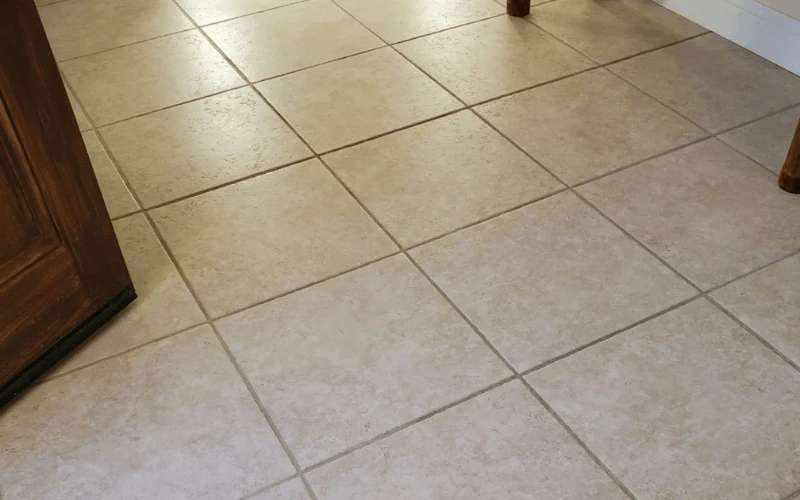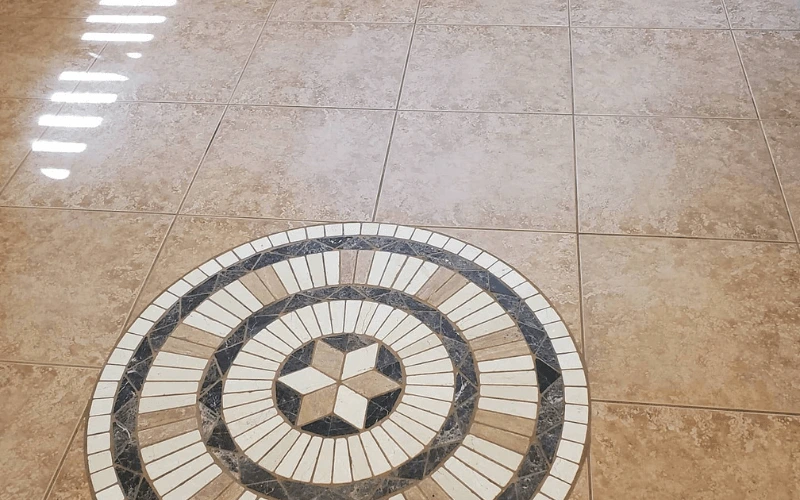

Mold thrives in damp, warm environments, making bathrooms and kitchens most vulnerable. Many homeowners observe dark streaks or patchy spots in their grout and look for the best ways to Remove Mold From Grout and tile surfaces effectively. The mold may look gone at first, only to return quickly because their cleaning method didn’t tackle the deeper growth or lingering moisture.
Our team often receives requests from clients while cleaning tile surfaces on-site, and they insist on knowing some professional grout mold removal tips. That’s why we’ve shared some smart, useful techniques in this piece to help you maintain your flooring and keep it mold-free.
How to Identify Mold in Grout?
Cleaning mold from grout only works well if you know which one is present on your tile flooring. Here’s what our experts think you must focus on to recognize mold growth in grout:
- Visual signs: Black, green, or brown patches along grout lines or discoloration (doesn’t lift with normal cleaning).
- Texture cues: A slimy or fuzzy feel on grout surfaces suggests active mold presence.
- Odors: A musty or earthy smell lingering after cleaning is a strong indicator of mold presence.
- Moisture: Persistent dampness near grout lines is a classic sign of mold growth.
EPA notes that molds reproduce through tiny, invisible spores that float in indoor air and settle on damp grout, which explains why homeowners face recurring mold growth problems.
Expert Tips on How to Remove Mold From Grout Using Natural Remedies
Once the mold is identified, the next crucial step is to assess its severity. Our in-house experts insist on this as it allows you to use precise solutions and natural ways to remove mold from grout for effective results.
For instance, light mold often appears as faint streaks or spots that can be washed away with simple DIY cleaning, moderate mold shows darker patches that withstand simple cleaning and may need stronger options.
Likewise, heavy or severe mold spreads widely, carries a musty odor, and usually requires professional help.
1. Quick Removal for Light Mold
EPA stresses “acting quickly” once you recognize mold growth, as the longer it sits on grout, the more damage it inflicts. Light mold is usually found on bathroom grout or kitchen backsplash, where moisture is surface‑level, and a natural option, such as white vinegar, can be useful.
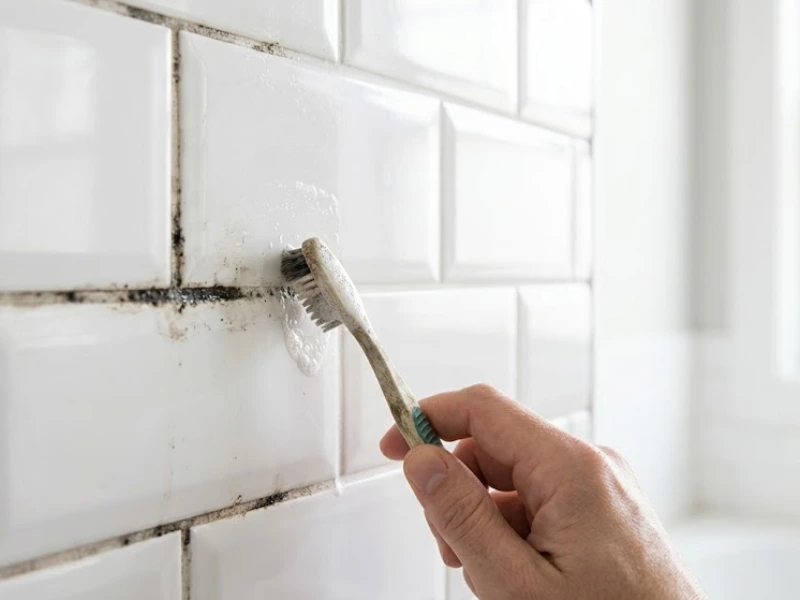
What to do:
- Mix equal parts white vinegar and water in a spray bottle
- Spray well on moldy grout
- Let the solution be on the surface for 10 to 15 minutes
- Scrub with a stiff brush or an old toothbrush
- Rinse thoroughly and dry with a cloth
Result: Faint streaks or spots clear with white vinegar solution.
An alternative recommendation from our experts is that you make a paste with baking soda and water, apply it, scrub, and rinse.
2. Tackling Moderate Mold
Moderate molds often appear in shower corners or around sinks where deep‑settled moisture lingers, forming darker patches that resist vinegar or baking soda. Consider a homemade detergent mix that includes a natural substance that exhibits cleansing properties.
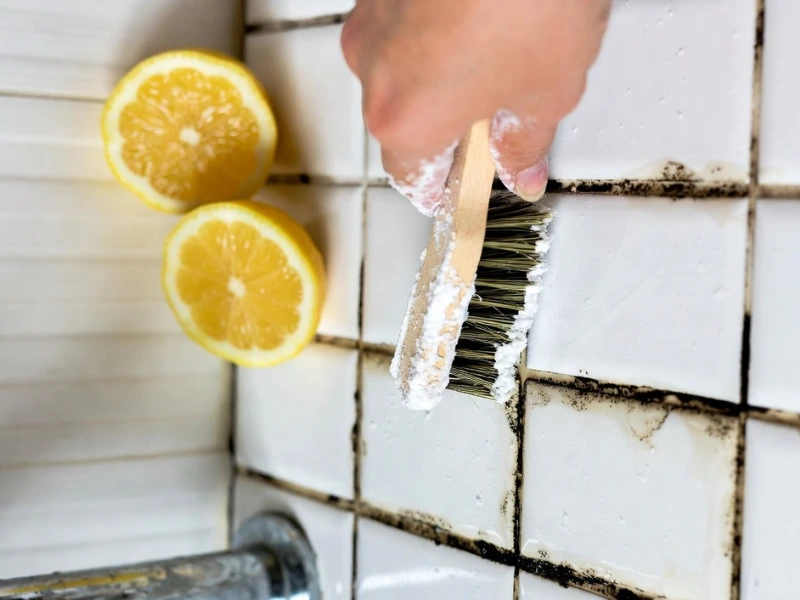
What to do:
- Mix warm water with a few drops of liquid dish soap
- Add a natural cleansing agent, such as lemon juice
- Spread the mixture onto the affected grout lines
- Scrub with a stiff brush or any toothbrush
- Rinse properly with clean water and dry with a cloth
Result: Dark patches may reduce, but some discoloration can remain, requiring stronger solutions.
Our experts recommend using diluted bleach (1 part bleach to 10 parts water) or a commercial grout cleaner only if mold is persistent even after cleaning with natural options.
3. Severe Mold Removal From Grout
Basements, behind tiles, or areas with repeated leaks or water flow (bathrooms), foster severe mold growth. They are deeply penetrated in grout lines and release odors. Hence, stronger solutions are required to clean.
This means using bleach (less dilution) or a strong commercial formula; both are toxic chemicals, so careful usage is necessary.
What to do:
- Mix bleach at a stronger ratio: 1 part bleach to 5 parts water (less diluted than moderate mold treatment)
- Apply the solution to grout lines on mold or deep penetration
- Allow solution to sit for 20 to 30 minutes (not longer)
- Scrub thoroughly with a stiff brush to break down embedded growth
- Rinse multiple times until the odor feels gone and the grout appears clean
- Ventilate the area well for quick drying
Result: A stronger solution will lighten stains and reduce odor, but leaves grout visibly dark or weakened. The musty smell might stay even after multiple attempts and will require professional expertise to eliminate.
Pro safety tip: Never mix bleach with vinegar or ammonia, as it forms toxic fumes that can trigger respiratory issues. Also, wear safety gloves to protect your skin and lungs from the odors of cleaning solutions.
Signs You Need Professionals to Remove Mold From Grout
Severe mold growth is one of the obvious signs that you need expert help, but our team also believes that homeowners should not avoid these signs, which indicate the need for professional assistance:
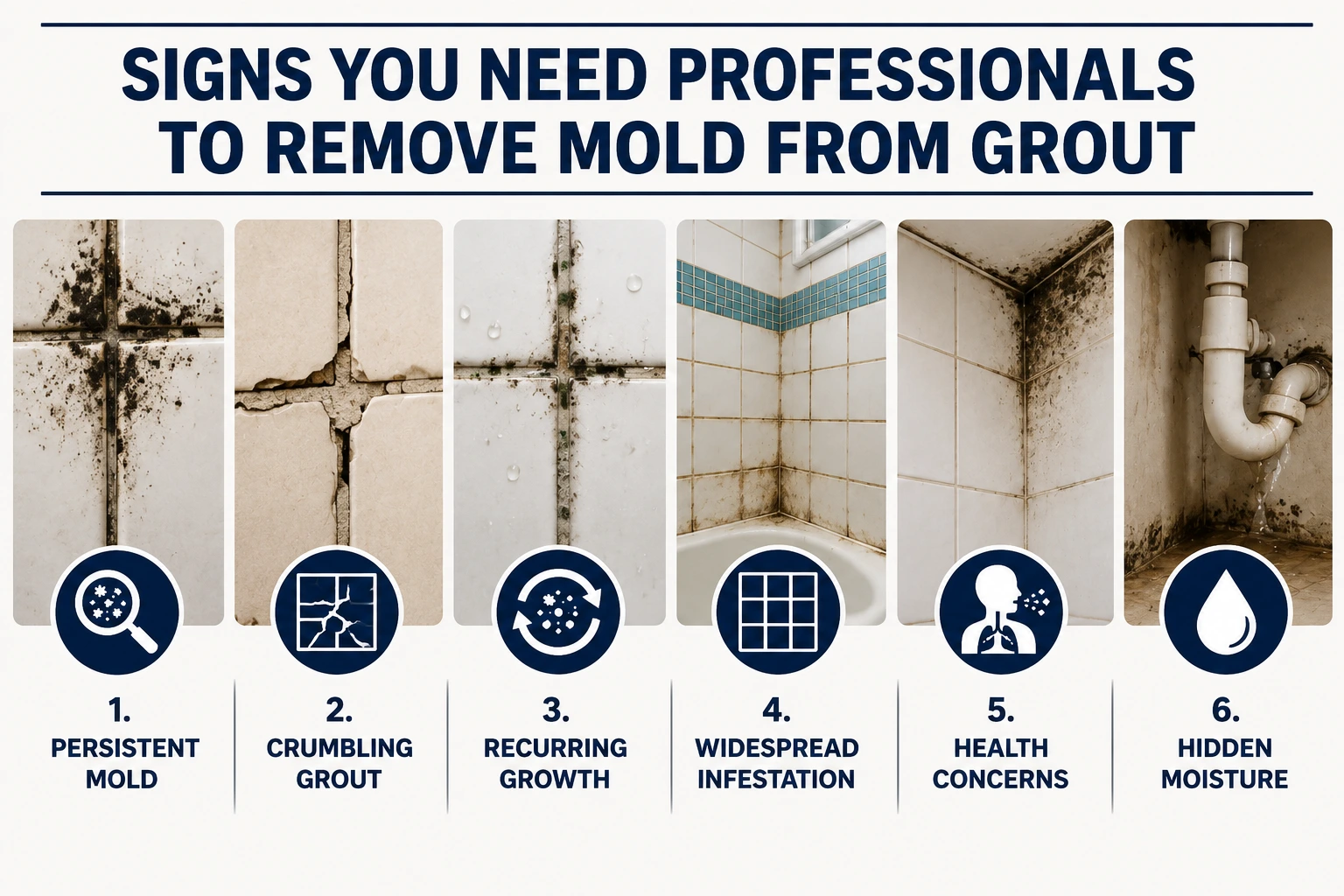
- Persistent Mold: The grout stays dark, and odor lingers even after multiple cleaning attempts
- Crumbling Grout: Refers to visible damage where grout begins to break apart or lose its entire structural integrity.
- Recurring Growth: Mold returns despite thorough cleaning, signaling hidden moisture issues.
- Widespread Infestation: Large areas of grout are affected across bathrooms, kitchens, or basements.
- Health Concerns: Persistent musty odor, allergies, or respiratory issues occurring frequently after excessive mold exposure.
- Hidden Moisture: Water leaks behind tiles or plumbing problems that DIY cleaning doesn’t eliminate.
What to Expect From Our Experienced Team
- Thorough inspection: Our team inspects your tile and grout to identify the type (ceramic, porcelain, or natural stone) and observe any previous damage, existing cracks, or visible wear and tear.
- Pre-vacuum: Technicians thoroughly vacuum the edges and corners of the surface to remove loose soil and dirt particles.
- Pre-spraying: Our team uses a pre-spray green cleaning agent to break down dirt and stains, which is safe and eco-friendly.
- Extraction method: We use industrial-grade extraction tools to deep clean dirt and grime.
Once these methods are implemented, our experts dry the flooring and conduct a final inspection. They ensure no moisture is left, which may allow mold growth in the future. Also, if regrouting is needed, our technicians explain everything until you feel satisfied with the response.
Tips to Consider for Preventing Mold Growth
While professionals do their job well, regular upkeep remains essential, especially if regrouting was done. We emphasize this as it helps you prevent spending repeatedly. Here are some practical tips to help homeowners remove Mold From Grout and prevent it from returning.
- Wipe tiles dry after showers or cooking.
- Improve ventilation; keep exhaust fans in bathrooms and kitchens to control moisture.
- Seal grout after cleaning to decrease future mold growth.
- Clean up liquid spills quickly, and get pipeline leakage issues fixed within the house to prevent dampness.
- Spray mold control solutions once a month; they form a protective barrier and prevent spores from settling deep.
- Know about the dos and don’ts of tile and grout cleaning.
Get Complete Mold Removal Done By Professional Tile & Grout Cleaners
To remove mold from grout, maintaining a balance of DIY effort and professional expertise is crucial. In our experience, light infestations respond well to homemade mixes, moderate cases need stronger solutions, and severe mold outbreaks demand expert intervention.
At Sky Blue Carpet Cleaning, our team has years of experience in grout and tile cleaning. We use effective, eco‑friendly solutions to deep clean grout lines, eliminating mold, stains, and odors. Our advanced equipment restores the surface’s original shine while maintaining complete hygiene.
Here’s what Joanna Burns had to say about our tile & grout cleaning services:
“We hired Armando and his team to clean the carpets and tile/grout at our business office. They worked us into their schedule quickly, showed up on time, and worked hard until the job was done. They did a fantastic job, and we are impressed with how great the floors look.”
So, stop wasting time, and give us a call to revive your tile flooring.
FAQs
Q. Does mold go through grout?
Yes, mold can penetrate porous grout because it absorbs moisture and residue. It makes stains and odors harder to remove. It often requires deeper cleaning or professional hands.
Q. Can I Remove Mold From Grout naturally
Yes, you can remove grout mold naturally with baking soda, white vinegar, or lemon juice, as mentioned earlier. These break down stains and odors safely without compromising the flooring structure or causing health issues.
Q. What should you not clean grout with?
Avoid using harsh acids such as bleach or ammonia‑based cleaners, which cause erosion and discoloration. Also, try not to use abrasive tools such as wire brushes or steel wool, and avoid oil‑based cleaners that leave residue on the flooring.
Q. How often should grout be cleaned to prevent mold?
Grout cleaning should be done at least once a week with mild solutions to prevent mold from taking hold. For high‑moisture areas such as bathrooms, we often recommend deep cleaning every few months to help keep grout mold‑free. Contact us and discuss cleaning frequency with our experts.